
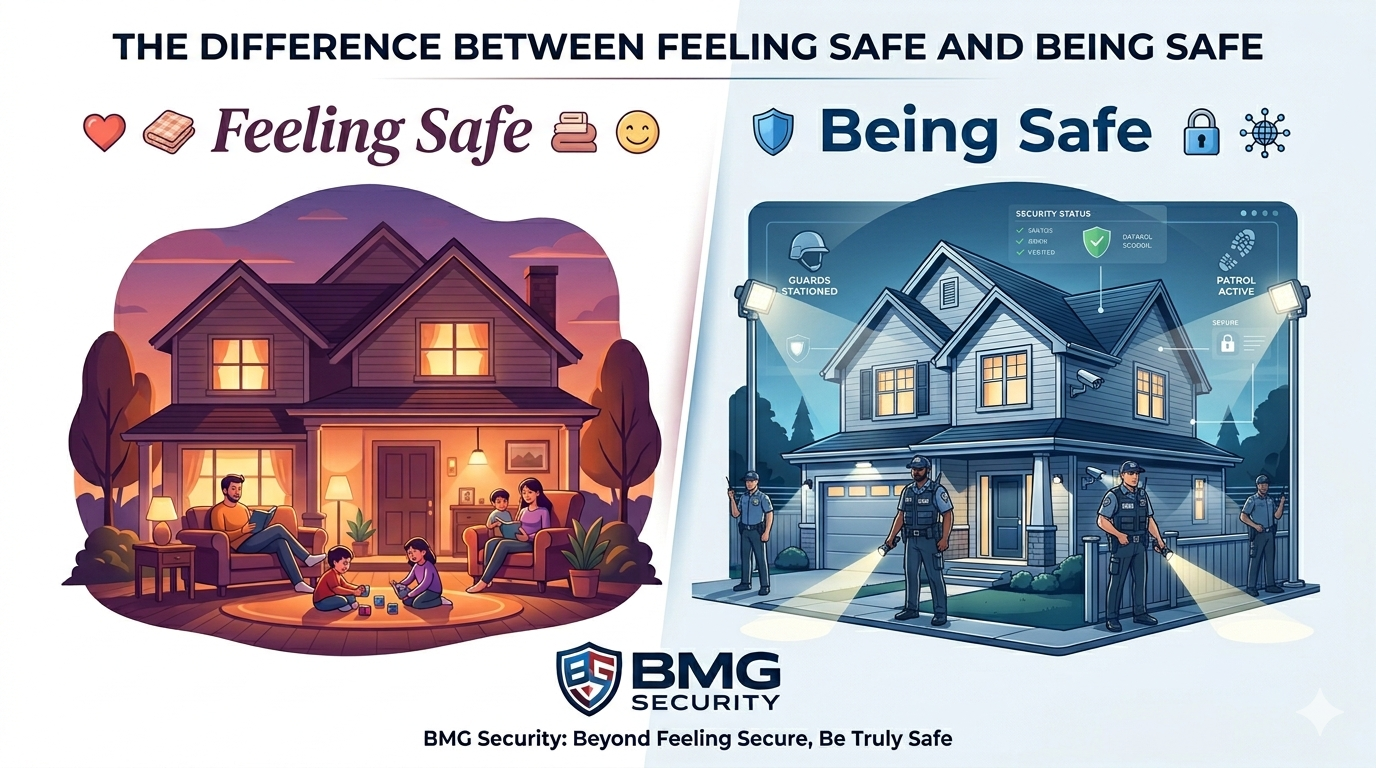
Safety is something everyone wants in life. We all want to feel protected at home, at work, and in public places. But there is an important difference between feeling safe and actually being safe. Many people misunderstand this, and it can sometimes lead to poor or risky decisions in daily life.
Understanding this difference helps us become more aware, more careful, and better prepared to protect ourselves and others.
What is Feeling Safe?
Feeling safe is based on emotions. It is how secure we think we are in a place or situation.
When a place looks clean, peaceful, or familiar, we naturally feel relaxed. For example, being at home, in a well-known shop, or in a quiet area often gives us a sense of comfort and peace.
However, this feeling is not always reliable. A place may look calm on the outside but still have hidden risks. Our emotions can sometimes create a false sense of security, making us less alert than we should be.
What is Being Safe?
Being safe means having real protection in place. It is not based on feelings but on actual safety measures and systems.
This includes trained security guards, CCTV surveillance, proper lighting, access control systems, and emergency response planning. These measures actively work to reduce risks and prevent incidents.
A place with strong security may not always feel completely relaxed because of strict rules or monitoring, but it provides real and effective protection.
Key Difference
The main difference is simple: feeling safe is based on emotions and comfort, while being safe is based on real protection and safety systems, meaning a place can feel safe but still be risky, and a secure place may not always feel relaxed but is actually safer.
Why This Difference Matters
Understanding this difference is very important in everyday life.
Many people trust situations based only on how they feel, but real safety requires awareness and proper protection.
For example:
- A quiet street may seem safe but can still be risky at night
- A friendly-looking situation may still involve danger
- A building without proper security may feel normal but is actually vulnerable
- A familiar place may still need safety checks and precautions
This shows why relying only on emotions is not enough. Awareness and preparation are always important.
Importance of Security Services
Professional security services play a major role in ensuring real safety. Trained security personnel are able to identify risks early, respond quickly, and manage unexpected situations effectively.
They do more than just “stand guard”, they actively help prevent incidents and maintain order and safety.
Choosing the best guard services in thrissur ensures better protection through skilled manpower, proper monitoring systems, and well-planned security strategies. Reliable security support adds an extra layer of safety for homes, businesses, and public spaces.
Where Security Services Make a Difference
Security services are important in many areas such as:
- Residential apartments and gated communities
- Commercial buildings and offices
- Shops, malls, and warehouses
- Events and public gatherings
- Educational institutions and hospitals
In all these places, trained guards help maintain discipline, prevent unauthorized access, and respond quickly during emergencies.
Simple Safety Tips for Daily Life
- Always stay aware of your surroundings
- Avoid trusting unfamiliar situations too quickly
- Use basic security tools like locks, alarms, and cameras
- Prefer places with visible and active security systems
- Stay alert, even in familiar environments
- Focus on real safety measures, not just comfort
Feeling safe gives peace of mind, but it does not guarantee real protection. Being safe is what truly matters in everyday life.
When we understand the difference between the two, we can make smarter choices and stay better protected. Reliable security support also plays a key role in maintaining real safety in homes, workplaces, and public spaces.
Professional providers like BMG Security focus on practical protection, trained personnel, and effective safety systems that ensure real security, not just the feeling of it. True safety is not about how things look or feel. It is about how well you are actually protected.
Contact BMG Security Services Today for Security Guards : 94475 73000